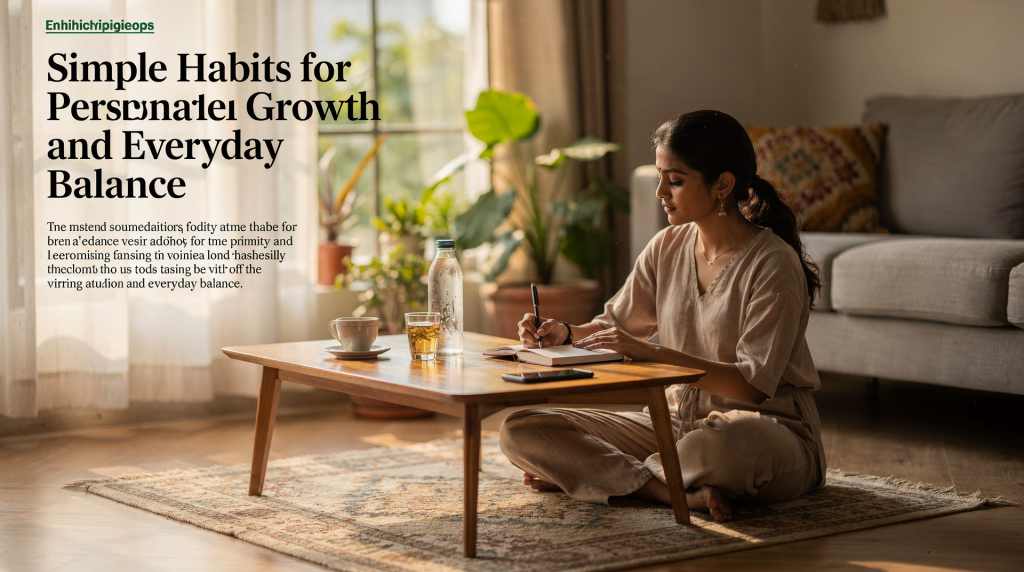
Personal growth rarely arrives through grand gestures. It builds quietly, in the small, repeatable choices we make on ordinary Indian days—juggling work, long commutes, family duties, and the constant hum of urban life. The aim isn’t to reinvent yourself overnight. It’s to become a steadier, more grounded version of who you already are, one practical step at a time. I’ve seen this truth deepen after my own move from a sprawling flat to a compact apartment in Pune. When your physical footprint shrinks, you realize how much of your inner equilibrium depends on the tiny rituals that fit into the corners of a real, sometimes messy, day.
Why small habits work better than big resolutions
Grand resolutions collapse because they lean on motivation—a fleeting, unreliable fuel. Small habits endure because they lean on structure. A five-minute practice, repeated daily, rewires your days far more reliably than a one-hour plan you keep postponing. After downsizing, I noticed this principle playing out in my home as much as in my mind. In a smaller space, there’s less room for clutter to hide, and less tolerance for complicated systems. A simple habit—like putting one thing back in its place—kept the apartment feeling open and calm, while ambitious “organization projects” often stalled. The same applies to inner growth: start with what fits, and let repetition do the heavy lifting.
What “everyday balance” actually means
Everyday balance isn’t about maintaining a flawless zen state. It’s about knowing what truly matters today, having enough energy for the tasks in front of you, recovering faster when the day derails, and living in a way that feels grounded rather than frantic. Crucially, it also means your home isn’t quietly working against you. In a compact living space, balance often translates to a visual and functional quietness—surfaces that breathe, corners that invite rest, and a layout that supports your routines instead of interrupting them. That sense of ease usually flows from ordinary actions repeated consistently, not from a perfectly curated life.
The foundation: habits that support growth without overwhelming you
If you want habits to stick, keep them small enough to slip into your actual life—especially when your environment is compact and every object competes for attention. The following practices are designed to anchor you without demanding extra square footage or special equipment.
1. Start the day without reaching for your phone
The first few minutes after waking shape the tone of the entire day. Instead of opening messages or social apps immediately, sit still for a moment and notice your breath. In my Pune apartment, I’ve made a small corner by the window my morning spot—just enough room for a cushion. That physical anchor reinforces the mental pause.
Try this:
- sit on the bed or floor for 60 seconds
- take 3 slow breaths
- ask yourself one question: “What would make today feel steady?”
- only then reach for your phone
This habit is simple, but it reduces mental clutter before it begins, and it reminds you that you’re in charge of your attention, not the other way around.
2. Use one “anchor habit” for morning stability
An anchor habit is one action that signals the start of your day. It could be drinking a glass of water, making the bed, a short stretch, a brief prayer or quiet reflection, or writing three priorities for the day. The specific act matters less than its consistency. Over time, it becomes a cue that tells your mind: this day has structure. In a smaller home, I’ve found it helpful to tie the anchor to a specific spot—like the kitchen counter where I fill my water bottle—so the environment itself prompts the behavior. This is especially valuable when you’ve downsized and every zone serves multiple purposes; a clear anchor prevents the morning from dissolving into reactive busyness.
3. Practice mindful breathing during transitions
Most stress spikes happen during transitions: before work, after a meeting, after an argument, or before sleep. A short breathing pause helps the nervous system settle. I often use the balcony—even a tiny one—as a transition zone, stepping there for a few breaths between tasks. It physically marks the shift.
Use this quick reset:
- Inhale through the nose for 4 counts
- Hold for 4 counts
- Exhale slowly for 6 counts
- Repeat 3 times
This is useful before a difficult conversation, after a long commute, or when you feel scattered. It requires no extra space, just a pause.
Daily habits that improve focus and emotional steadiness
4. Eat one meal without screens
Screen-free eating is one of the easiest mindfulness habits to maintain. It slows you down and helps you notice hunger, fullness, taste, and mood. In a compact home, the dining table might double as a work desk, so this habit also reclaims a zone for nourishment rather than productivity. Even if you live in a studio, designating a small tray or a corner of the table as a screen-free spot can shift the experience.
Benefits include:
- less mindless overeating
- better digestion awareness
- a calmer pace in the middle of the day
- a small but powerful break from constant stimulation
If a full screen-free meal feels unrealistic, start with the first ten minutes of one meal. That alone can reset your relationship with food and space.
5. Keep a “reset window” in the middle of the day
A reset window is a 5–10 minute pause where you stop consuming and start noticing. You can use it after lunch or mid-afternoon. In my experience, even the smallest apartment has a spot—near a window, on a balcony, or simply a chair facing away from the main clutter—that can become a reset point. The key is to associate that spot with a deliberate pause.
Use the time to:
- stretch your neck and shoulders
- step near a window or balcony
- drink water slowly
- look away from the screen
- write down the one thing you need to finish next
This is not laziness. It is maintenance. And in a compact home, where you can’t physically escape to another room, these micro-breaks prevent the walls from closing in on you mentally.
6. Do a short evening brain dump
Many people carry unfinished thoughts into the night. A quick brain dump reduces mental noise. I keep a small notebook on my bedside shelf—a dedicated spot that signals it’s time to offload. In a smaller living space, mental clutter can feel more intense because there’s less physical separation between work, rest, and worry. Writing things down creates a boundary.
Write down:
- what you completed
- what is still pending
- what is worrying you
- what can wait until tomorrow
Keep it short. The point is not to create a perfect journal entry, but to stop your mind from rehearsing the same thoughts at bedtime.
Personal growth habits that build real momentum
7. Learn to finish small tasks immediately
A useful rule is: if something takes less than two minutes, do it now. In a compact home, this habit is a lifeline. When every surface is precious, a single unwashed cup or a stray bill can quickly make the space feel chaotic. The two-minute rule prevents small tasks from snowballing into visual and mental noise.
Examples:
- replying to a simple message
- putting one item back in place
- filing a bill
- washing one cup
- confirming an appointment
This habit reduces clutter in both your space and your mind, and it reinforces a sense of agency—especially important when you’re adjusting to a smaller footprint.
8. Choose one area to improve at a time
Many people stall because they try to fix sleep, fitness, finances, home organization, and mindset all at once. That usually creates guilt and burnout. When I downsized, I had to resist the urge to overhaul everything simultaneously. Instead, I focused first on decluttering the kitchen, then on establishing a sleep routine, then on movement. Each win in one area made the next feel more manageable.
Choose one focus area for 2–4 weeks:
- sleep routine
- decluttering
- movement
- meal structure
- emotional regulation
When one area becomes steadier, the others get easier. This approach respects the reality that your home and your habits evolve together; you can’t force a calm mind in a chaotic space, but you can tackle one zone at a time.
9. Track consistency, not perfection
Perfection makes habits fragile. Consistency makes them durable. In the context of home, this means accepting that some days the bed won’t be made or a corner will get cluttered. The goal is to return to the habit without self-criticism.
A better metric is:
- Did I do the habit today?
- If not, what got in the way?
- Can I make it easier tomorrow?
A missed day is data, not failure. This mindset is especially helpful when you live in a smaller space, where a single messy day can feel magnified. Instead of spiraling, you learn to reset quickly.
How your home affects personal growth
Your environment shapes your habits more than willpower ever will. If your home is cluttered, overstimulating, or poorly organized, every routine becomes harder. I learned this firsthand after moving from a large flat to a compact apartment in Pune. In the old place, I could close a door on mess; in the new one, every object shouted for attention. That shift taught me that personal growth and grounded living are inseparable. A calm home supports calm behaviour. When you buy or rent with intention—prioritizing how a space feels over how many square feet it offers—you set the stage for your habits to thrive.
Signs your space is working against you
- you cannot find basics quickly
- surfaces stay crowded
- you feel tired just looking around
- your home has no clear resting zones
- you keep buying things to compensate for discomfort
If this sounds familiar, the issue may not be discipline. It may be the setup of the space. In a compact home, these signs are amplified because there’s no buffer. But the good news is that small adjustments can yield immediate relief.
A simple home reset that supports balance
Use this checklist, which I’ve refined through my own downsizing journey and now share with anyone feeling overwhelmed by their environment:
- clear one surface today
- keep only daily essentials within reach
- remove one item you no longer use
- create a phone-free corner
- keep one area visually quiet
- store duplicates in one place only
A lighter space often leads to lighter thinking. When I cleared the kitchen counter in my Pune apartment, the whole room seemed to exhale—and my morning routine suddenly felt less rushed. That’s the power of a deliberate reset: it doesn’t require a bigger home, just a more intentional one.
A practical weekly routine for everyday balance
This rhythm is designed to be sustainable even in a compact living situation, where every habit must earn its place. You don’t need to do everything at once. Pick two or three and repeat them until they feel natural.
| Day | Habit Focus | Time Needed | Why It Helps |
|---|---|---|---|
| Monday | Set 3 priorities | 5 minutes | Creates direction |
| Tuesday | Screen-free meal | 15–20 minutes | Improves presence |
| Wednesday | Midday reset walk | 10 minutes | Lowers tension |
| Thursday | Declutter one small zone | 15 minutes | Reduces friction |
| Friday | Evening brain dump | 5 minutes | Clears mental clutter |
| Saturday | Review the week | 10 minutes | Builds awareness |
| Sunday | Reset home and schedule | 20 minutes | Prepares the week |
Common mistakes people make with self-improvement
Trying to change too much at once
Too many habits at once usually means none of them become stable. In a smaller home, this mistake is even more costly because the physical environment can quickly become a reflection of scattered intentions. Focus on one shift at a time, and let the space support it.
Waiting for the perfect mood
Good habits are built on ordinary days, not ideal ones. I’ve decluttered on days when I felt low, and those small wins often lifted my mood more than waiting for motivation ever did. Your home doesn’t need you to feel inspired; it just needs you to show up.
Making habits too complicated
If a habit needs special equipment, a long setup, or a large time block, it will be harder to maintain—especially in a compact apartment where storage is limited and every activity must be streamlined. The best habits are almost invisible in their simplicity.
Ignoring the environment
If your room, schedule, or devices keep pulling you off track, the habit will keep collapsing. After downsizing, I realized that my previous home had hidden my environmental friction; the new, smaller space exposed it. Now I treat my surroundings as a co-creator of my habits, not a backdrop. Adjust the setup, and the behavior often follows.
Treating one bad day as a setback
Progress is built through recovery, not flawless performance. In a compact living space, a single messy day can feel like a major regression because the clutter is so visible. But learning to reset without drama is itself a growth skill. One untidy corner doesn’t erase weeks of steadiness.
A simple 7-day starter plan
If you want to begin without overwhelm, use this sequence. I designed it to work even in a studio apartment, where each action can be tied to a specific spot, reinforcing the connection between habit and home.
Day 1
- drink water before phone use
- write 3 priorities
Day 2
- eat one meal without screens
- put away one unnecessary item
Day 3
- take 3 slow breathing breaks
Day 4
- clear one small surface at home
Day 5
- do a 5-minute evening brain dump
Day 6
- take a short walk without headphones
Day 7
- review what felt easy and what felt forced
This is enough to create momentum. By the end of the week, you’ll have touched both your inner rhythms and your physical space, and you’ll start to see how they feed each other.
A realistic mindset for long-term growth
Personal growth is not about becoming endlessly productive. It is about becoming more aware, more steady, and more intentional with the life you already have—and with the home that holds that life. When your habits are simple, your space is less chaotic, and your routines support your energy, balance stops being a vague idea and becomes part of daily life. In my journey from a large flat to a compact Pune apartment, I discovered that true rootedness has nothing to do with square footage. It comes from aligning your inner practices with an environment that reflects what you genuinely need, not what you’ve accumulated. That alignment is the quiet foundation of lasting growth.
FAQ
What is the easiest habit to start with?
Start with one habit that takes less than five minutes, such as drinking water before checking your phone or taking three deep breaths before work. If you can, anchor it to a specific spot in your home—like the kitchen sink or a particular chair—so the environment reminds you.
How long does it take for a habit to stick?
There is no fixed number that works for everyone. A habit becomes more reliable through repetition, especially when it is easy to repeat in real conditions. In a compact home, where friction is more noticeable, simplifying the habit’s physical setup (e.g., keeping a water bottle visible) can speed up the process.
What if I keep missing days?
Missed days are normal. Reduce the habit size, remove friction, and restart the next day without trying to “make up” for everything at once. If your space contributed to the slip—say, a cluttered desk made it hard to focus—do a two-minute tidy first, then resume.
Can a cluttered home affect mental balance?
Yes. A cluttered environment increases visual noise, decision fatigue, and low-grade stress, which can make focus and calm harder to maintain. In a smaller living space, this effect is magnified because you can’t escape the clutter. Even clearing one surface can bring noticeable mental relief.
Should I focus on mindset or routine first?
Start with routine. Simple routines often make mindset shifts easier because they create stability before trying to solve bigger emotional patterns. When I downsized, establishing a morning tidy-up routine gave me a sense of control that gradually reshaped my outlook. A predictable environment fosters a more resilient mindset.
What is the best way to stay consistent?
Make the habit small, attach it to something you already do, and track completion instead of perfection. Also, design your home to support the habit: keep related items visible and accessible, and remove obstacles. Consistency thrives in a space that works with you, not against you.